
RCC tanks are widely used for water storage, chemical processing, industrial applications, and wastewater management. However, concrete surfaces can deteriorate when exposed to moisture, chemicals, abrasion, and harsh operating conditions. RCC tank FRP lining provides an effective protective solution that helps improve the durability and service life of concrete tanks. Choosing a reliable RCC tank FRP lining supplier in India is important for achieving a strong, durable, and properly installed lining system.
What Is RCC Tank FRP Lining?
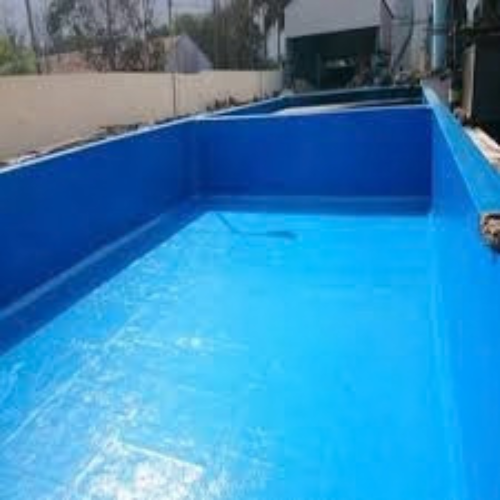
FRP, or Fibre Reinforced Plastic, lining is a protective layer made using fiberglass reinforcement and resin. It is applied over the internal surface of an RCC tank to create a durable barrier between the concrete structure and the stored material. Depending on the application, different resin systems and fiberglass specifications can be selected to provide suitable chemical, moisture, and corrosion resistance.
An experienced RCC tank FRP lining supplier can assess the tank condition and recommend an appropriate lining system based on the application, operating environment, and material being stored.
Benefits of FRP Lining for RCC Tanks
FRP lining offers several advantages for industrial and commercial RCC tanks. One of the key benefits is its resistance to moisture and many chemicals. The lining can help prevent direct contact between aggressive substances and the concrete surface.
Other benefits include:
- Improved protection against corrosion and chemical attack
- Reduced water and moisture penetration
- Smooth and easy-to-clean internal surfaces
- Good mechanical strength and durability
- Longer service life of RCC tanks
- Suitable solutions for various industrial environments
- Reduced maintenance requirements when properly installed
These characteristics make FRP lining useful for tanks used in water treatment, chemical industries, manufacturing facilities, and wastewater applications.
Applications of RCC Tank FRP Lining
FRP lining can be used in a variety of RCC tank applications. It may be suitable for water storage tanks, chemical storage areas, effluent treatment systems, wastewater tanks, process tanks, and other concrete structures that require surface protection.
The correct lining system depends on factors such as the type of liquid, concentration of chemicals, temperature, tank dimensions, and expected operating conditions. A professional supplier can help identify the appropriate materials and application method.
Choosing an RCC Tank FRP Lining Supplier in India
When selecting an RCC tank FRP lining supplier in India, businesses should consider experience, material quality, technical knowledge, and installation capabilities. A reliable supplier should understand surface preparation, resin selection, fiberglass reinforcement, curing requirements, and quality inspection.
Proper surface preparation is particularly important because the FRP lining needs a clean and suitably prepared concrete surface for effective bonding. Professional application can also help reduce problems such as blistering, delamination, cracking, and premature failure.
Why Professional FRP Lining Matters
Although FRP lining provides strong protective properties, its performance depends heavily on correct installation. Experienced professionals can inspect the RCC tank, identify surface defects, prepare the substrate, apply suitable resin and fiberglass layers, and complete the curing process according to project requirements.
A dependable RCC tank FRP lining supplier can also provide guidance regarding maintenance and periodic inspection to help preserve the lining over time.
Conclusion
RCC tank FRP lining is a practical solution for protecting concrete tanks against moisture, chemicals, and demanding industrial conditions. It can improve durability, simplify maintenance, and help extend the useful life of RCC structures. By choosing an experienced RCC tank FRP lining supplier in India, industries can obtain a suitable lining system designed around their specific application and operating requirements. Professional material selection, surface preparation, and installation are essential for achieving reliable and long-lasting results.